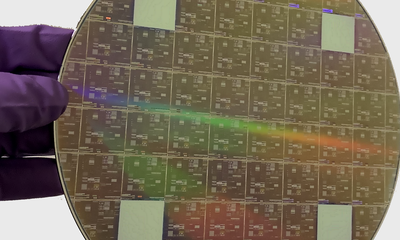
Qualcomm is shopping Huawei's patents while Washington still blocks the chips

Huawei and Qualcomm announced a multi-year patent cross licence covering 5G, compute, AI and networking, and Qualcomm is buying some of Huawei's US patents once regulators approve. No money terms were disclosed.

Editorial Take

Washington spent years telling the world that Huawei is too risky to sell fancy chips to, then watched America's biggest mobile chip licensor stroll into the patent shop anyway. It is a bit like putting a store on a sanctions list and still letting shoppers buy the recipe book in the window. Ideas, it turns out, clear customs more easily than wafers. Regulators still get the final say on the patent sale, but the deal is a good reminder that the chip world is more tangled than any list can capture, and that even rivals sometimes need to borrow each other's homework.
Qualcomm is shopping Huawei's patents while Washington still blocks the chips

Asian Silicon Brief

A sharper weekly read on what matters across Asia’s chip stack.

Every issue condenses the week’s most important GPU, CPU, and fab developments into short reporting and a clear editorial take.

Get the first issue
A stylized preview of the Asian Silicon Brief cover with chip and editorial elements

Coverage

Latest Stories

  • TSMC is in talks to help build Musk's Texas chip factory, and maybe run it

    TSMC is exploring ways to work with Terafab, Elon Musk's planned chip plant in Texas, and could end up owning and running it, Culpium reported late Friday. Musk confirmed on X that the two sides are talking. Intel is the other named partner, and Samsung already makes chips for Tesla in Texas. No deal, size or process has been disclosed.

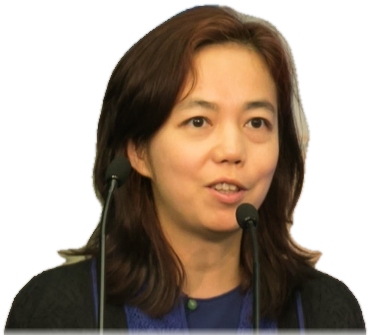
  • Fei Fei Li went from Chengdu teen to AMD’s next science chief

    Fei-Fei Li (李飞飞), the Stanford computer scientist behind ImageNet and co-founder of San Francisco lab World Labs, is slated to become AMD executive vice president and chief scientist after AMD’s announced ~$8.2 billion all-stock buy of World Labs closes. The deal is signed and still open: target close by end-2026, subject to approvals. She would report to Lisa Su.

  • The silicon under the AI boom is getting expensive again

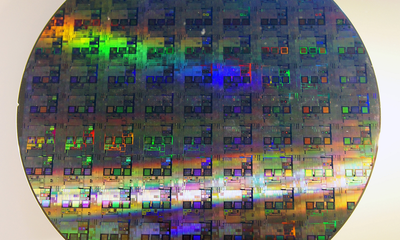
    TrendForce (Sep 25): Citing Commercial Times, new long-term agreement prices for 2027 could rise about 15–25% for 12-inch epitaxial wafers and more than 40% for polished wafers as AI and CoWoS demand tighten supply. Spot prices may clear above existing contracts as early as the fourth quarter of 2026. SUMCO still says modest hikes do not pay for new greenfield plants.

  • Where America fights data centers, Taiwan plants chip factories on sugar farms

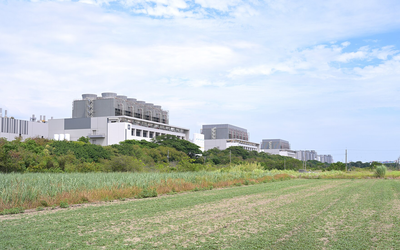
    Liberty Times (Sep 27 exclusive) and Taipei Times (Sep 28): Taiwan’s science council opened a one-month public comment on expanding Chiayi Science Park — about 199 hectares, mostly Taiwan Sugar farmland leases, the same cane-to-park pattern as Phases 1 and 2. Supply-chain sources say TSMC intends five more advanced packaging plants there, which would bring the Chiayi total to ten, driven by CoWoS demand from NVIDIA, AMD, and Apple. American towns fight hyperscale data centers on private land; Chiayi’s path runs through state sugar farms and a county that wants the build — not a claim that Taiwan has no NIMBY (Longtan still killed a TSMC site in 2023).

  • TSMC’s packaging boss just put a 2027 date on the CoWoS boom

    FTNN (Sep 27): At SEMICON Taiwan’s 3D IC summit, TSMC advanced packaging vice president He Jun (何军) said CoWoS capacity is on track from about 9,000 wafers a month in 2022 to about 175,000 by 2027 — nearly twenty times in five years — with compound annual growth above 80% through 2027 and the boom expected to run through 2029.

Showing 1–6 of 27 stories

Editorial watch

Silicon Radar

  • GPUs

    GPU design wins

    CoWoS and HBM coordination remain the key watchpoints for AI accelerator pacing.

  • CPUs

    Server CPU cadence

    Power and memory-bandwidth efficiency are shaping next-quarter product windows.

  • AI Silicon

    AI accelerator stack

    Interconnect, packaging, and memory integration are moving together across the region.

  • Fabs

    Foundry bottlenecks

    Yield quality and lithography sequencing remain tougher signals than headline capex.