Fei Fei Li went from Chengdu teen to AMD’s next science chief
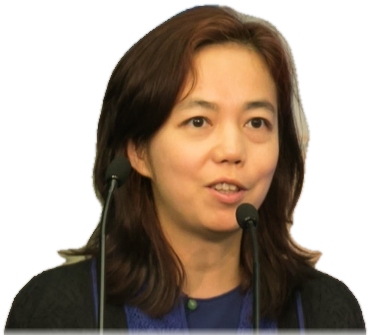
Fei-Fei Li (李飞飞), the Stanford computer scientist behind ImageNet and co-founder of San Francisco lab World Labs, is slated to become AMD executive vice president and chief scientist after AMD’s announced ~$8.2 billion all-stock buy of World Labs closes. The deal is signed and still open: target close by end-2026, subject to approvals. She would report to Lisa Su.
What happened
Fei-Fei Li was born in Beijing in 1976 and raised partly in Chengdu, Sichuan. Her family immigrated to the United States when she was about 15, per the Paul & Daisy Soros Fellows biography. She earned a BA in physics at Princeton (1999) and a PhD in electrical engineering at Caltech (2005), then taught at UIUC and Princeton before joining Stanford around 2009. She is now Sequoia Professor of Computer Science and a founding co-director of Stanford’s Human-Centered AI Institute (HAI). From 2013 to 2018 she directed the Stanford AI Lab. On a 2017–2018 sabbatical she was Google vice president and chief scientist of AI/ML for Google Cloud.
Her landmark academic work is : Deng, Dong, Socher, Li-Jia Li, Kai Li, and Li Fei-Fei, “ImageNet: A Large-Scale Hierarchical Image Database,” CVPR 2009. The large labeled image set and public challenge helped catalyze modern computer-vision deep learning on . Stanford Profiles later called ImageNet one of three driving forces of the modern AI era, alongside algorithms and compute. Popular press sometimes calls her the “godmother of AI.” That is a nickname, not a technical title. The English spelling is Fei-Fei Li, not “Lei.”
In 2024 she co-founded World Labs in San Francisco as CEO, with Justin Johnson, Ben Mildenhall, and Christoph Lassner. The lab’s pitch is : models that perceive, generate, reason about, and interact with virtual and physical 3D worlds. In her own framing, today’s large language models stay eloquent but ungrounded; spatial models are meant to move AI from words into worlds. Out of stealth the lab raised about $230 million (Reuters, September 2024), with AMD Ventures, Nvidia NVentures, a16z, NEA, and Radical among named backers. In February 2026 it raised about $1 billion more, with AMD and again among named investors. Products include Marble (generative 3D worlds from text, images, video, or layouts) and Atlas (omni world model for generation, reconstruction, and simulation). In July 2026 World Labs also absorbed SceniX, a robotics and simulation team. AMD was an early investor and, per World Labs, a partner for model training and inference on AMD GPUs before the buyout talks.
On September 28, 2026, AMD Newsroom and AMD IR said AMD had entered a definitive agreement to acquire in an all-stock transaction valued at approximately $8.2 billion, expected to close by the end of 2026 subject to regulatory approvals and other customary closing conditions. World Labs published a matching join-AMD post the same day, saying the deep technical partnership had started with training and inference optimization on AMD GPUs. After close, AMD says the World Labs team will keep advancing model research inside AMD; Johnson and Mildenhall continue leading that team, per the World Labs blog; and Dr. will join as executive vice president and chief scientist reporting to Dr. . Li’s AMD release line: advancing the next generation of AI needs close collaboration across model research, systems, and compute, and joining AMD gives the team resources and engineering depth to accelerate that work. Secondary wraps (CNBC) call the purchase AMD’s second-largest deal after the ~$50 billion Xilinx close in 2022; keep that as deal-size color, not a FLOPS claim. Stanford leave or FTE status after the AMD role is not verified in the brief pack we used, so this piece does not claim it.
Why it matters
For Asia Brief readers, Li is a diaspora path story with a US silicon ending: Beijing birth, Chengdu childhood, US training, -era vision infrastructure, then a San Francisco world-model lab that a US chipmaker wants inside its walls. The public M&A is US buyer, US target. Public sources checked for this brief do not tie World Labs compute to Huawei Ascend, Cambricon, or a PRC subsidiary. The China angle here is biography, not a China-chip plot.
The industry stake is the model-and-hardware loop. ImageNet helped make GPU-hungry vision models a default. World Labs bets the next leap needs denser memory, bandwidth, and simulation, the same scarcity stack that drives advanced packaging and HBM fights. ’s stated thesis is to pull that research closer to Instinct-class silicon and software competition with Nvidia’s moat, rather than only owning a check as an investor. Nvidia remains a named World Labs investor too, so the public record is not an exclusive silicon marriage; the acquisition is AMD’s bid to own the lab, not just sit on the cap table.
What to watch: any named regulatory clearances or 8-K detail on share math; a confirmed close date; whether Johnson and Mildenhall’s team leadership language stays intact; and any primary on Li’s Stanford appointment after close.